

Turning Implementation Lessons Into Lasting Organizational Knowledge

A few months after a payroll implementation, a familiar issue shows up. Someone says, “We saw that during testing.” Another person remembers the workaround. But when the team asks why the issue happened or what decision was made, everyone points to the person who led testing. And that person is out for the week. That’s when you find out how much of the project the organization actually remembers.
In Part 5, Protecting the Change During Implementation, we talked about how leaders protect change by giving people the time and focus to do the work. That responsibility continues after launch. Teams need time to make sense of what happened and pass along what they learned while the details are still fresh.
This is the work of organizational memory: turning implementation lessons into shared, accessible guidance that supports payroll operations long after go-live.
I’m keeping this one short because I know what the holidays can look like for payroll teams. There’s year end work to finish, time off to coordinate, and a life outside of work we want to be present for, too. One way we can take care of each other this season is to leave clear notes for the person covering for us, so they know what to do and we can actually step away.
Put the lesson where the work happens
Say retroactive time corrections caused pay differences during parallel testing. The project team figured out which corrections needed a second review before payroll closed. If that decision lives in a lessons learned deck, the next payroll analyst has to know the deck exists and where to find it.
Put the decision in the payroll close checklist, alongside the step where the analyst reviews corrections. Include what to look for, who owns the review, and why it matters. Now the lesson is available at the moment someone needs to act on it.
Make time to remember
The next time your team resolves a recurring issue, take five minutes to ask three questions.
What would we want the next person to know?
Where would they look for that answer while doing the work?
Who will update that resource while the details are fresh?
You can do this in a payroll debrief or during a handoff. Start with one issue the team is tired of solving. The next time it comes up, someone should be able to pick up where the team left off, even if the person who figured it out is on vacation.
AI During Implementation: Another Reason to Protect Focus
This is especially relevant as organizations explore AI during other major changes. A team implementing a new HR or payroll system may also be asked to evaluate AI features, automate more decisions, or redesign roles around new capabilities.
Some of that work may be valuable. But as I have said in my presentation, AI is not the transformation. The transformation is in how people understand the work, make decisions, build trust in the information, and use new capabilities responsibly.
An AI opportunity does not erase unresolved process questions or create more capacity for the people already carrying the implementation. Before adding it to the plan, leaders need to ask whether the organization has clear ownership, reliable data, a defined use case, and time to test what happens when the technology is wrong or uncertain.
Sometimes the best decision is to pursue the idea in the current phase. Sometimes protecting the larger transformation means giving that idea its own deliberate place later. Both can be signs of strong leadership.
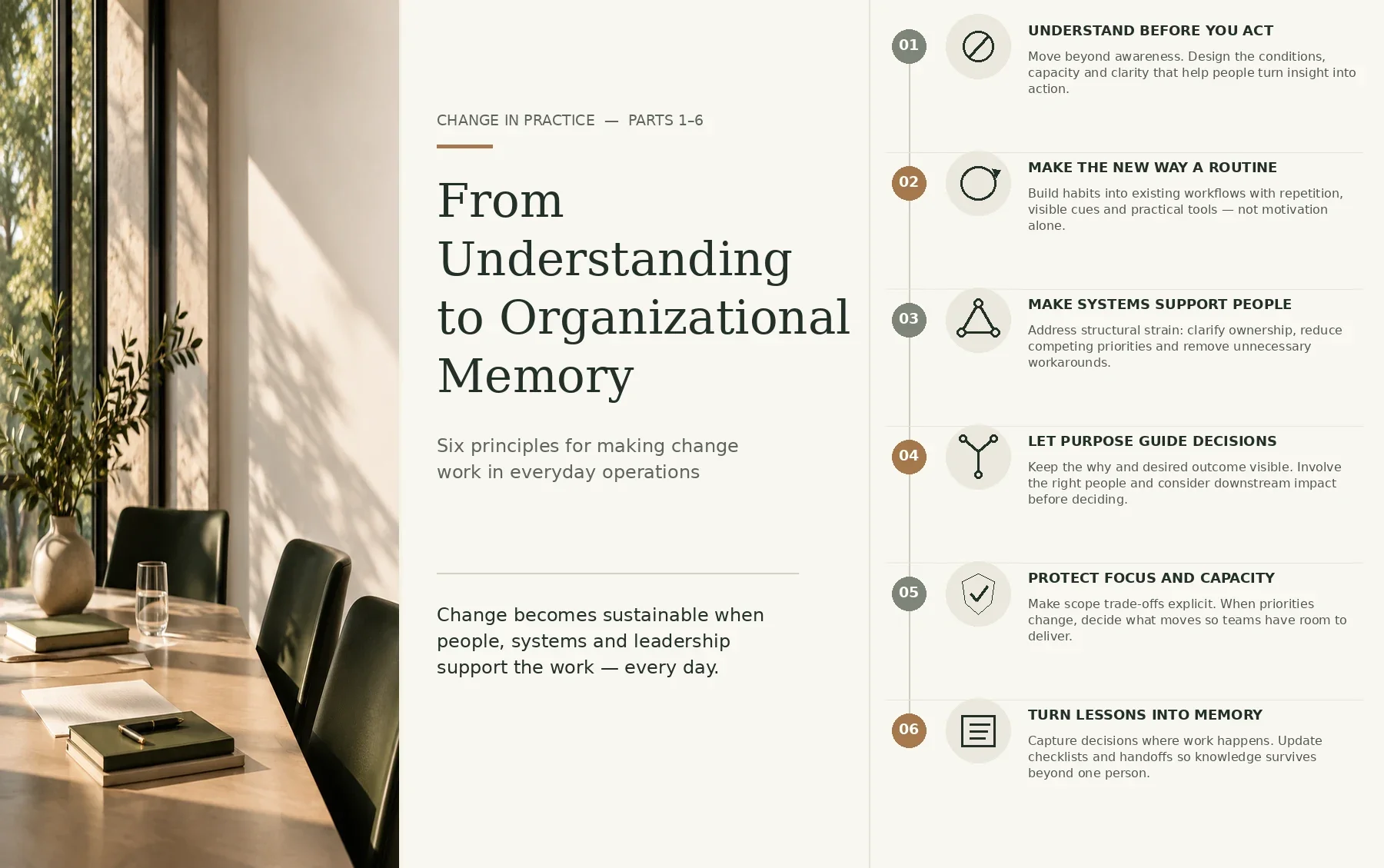
Explore the Change in Practice Series
Change is not a single event. It is an ongoing process shaped by people, habits, systems, leadership, and the ability to learn along the way.
Explore all six articles in our Change in Practice series:
Part 1 — From Understanding to Execution
Why awareness alone is not enough to create lasting behavioral change.Part 2 — When Change Becomes Routine
How habits and everyday workflows help make change sustainable.Part 3 — When Systems Work Against People
How organizational structures can create unnecessary strain and change fatigue.Part 4 — Decision Clarity During Change
Why a shared purpose and thoughtful decisions matter throughout transformation.Part 5 — Protecting the Change During Implementation
How leaders protect focus, capacity, and priorities during implementation.Part 6 — Building Organizational Memory
How teams capture lessons and make knowledge part of everyday operations.